Introduction
Effective shift planning is crucial for manufacturing operations. Poor scheduling can lead to understaffing during peak production times, overstaffing during slow periods, increased labor costs, and decreased employee satisfaction. This guide provides a practical framework for reviewing your shift-planning process.
1. Analyze Current Shift Patterns
Before optimizing, you need to understand your current situation. Review historical data to identify:
- Peak production times and days
- Bottlenecks in your production line
- Overtime patterns and costs
- Employee availability and preferences
- Skills gaps in your workforce
2. Consider Skills and Training Requirements
Manufacturing roles often require specific skills, training or internal authorizations. Ensure your planning process accounts for:
- Required skills, training or authorizations for specific roles
- Skill levels needed for different production stages
- Cross-training opportunities
- Training records that need renewal or review
3. Build from Requirements, Then Use Automation Carefully
Workforce-management software can bring the planning inputs together:
- Production schedules and demand
- Workstation staffing requirements
- Employee skills and current training records
- Absences and availability records
- Defined shift groups and rotations
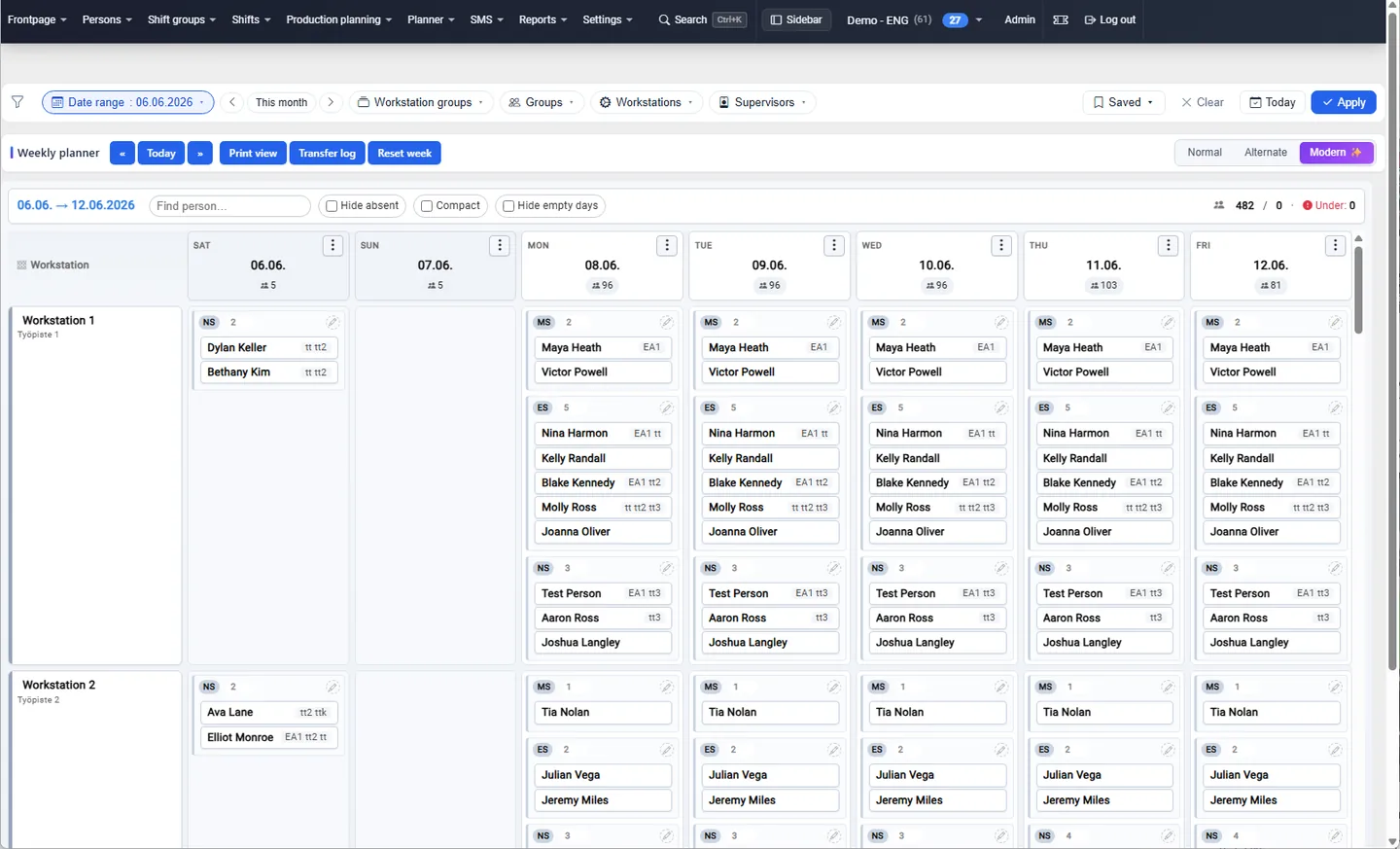
In Stafferi, automatic fill can use production demand or prior work history as a starting point. The planner reviews and adjusts the result; the organization separately reviews its legal, policy and agreement requirements.
The practical benefit depends on your current process, staffing complexity and data quality. Measure a representative planning cycle before and after a trial. You can also use our shift planning ROI calculator for an illustrative estimate based on your inputs.
4. Monitor and Adjust
Shift planning is not a one-time task. Continuously monitor:
- Production output vs. staffing levels
- Labor costs and overtime
- Employee satisfaction and retention
- Schedule adherence and attendance
Use this data to refine your scheduling strategies and improve over time.
5. Best Practices Summary
Key Takeaways:
- Start with data analysis of current patterns
- Map skills and training requirements to production needs
- Use automatic fill as a reviewed starting point
- Continuously monitor and optimize
- Involve employees in the planning process
Conclusion
Optimizing shift planning in manufacturing requires a combination of data analysis, strategic thinking, and the right tools. A measured before-and-after comparison gives you a clearer basis for evaluating cost, efficiency and employee experience.
Stafferi's workforce management system is designed specifically for manufacturing environments, helping you implement these practices with workstation-based shift planning, skills and training records, absence handling and production-plan inputs — with flat monthly pricing and no setup fees.
Frequently Asked Questions
How much time can manufacturers save with automated shift planning?
Time savings vary by operation. Record your current planning and rework time, test a representative planning cycle, and compare the results. Stafferi's ROI calculator is an illustrative estimate based on the inputs you provide.
What should a manufacturing shift schedule take into account?
A production shift schedule needs to cover rotating 2- and 3-shift patterns across multiple lines, workstation requirements (assembly, packing, QC, logistics), employee skills, current training or authorizations, absences, production demand and your organization's own legal and policy review. Mapping people to real workstations — not just to shifts — makes coverage easier to see.
How long does it take to implement shift planning software?
You can create a trial workspace with Stafferi's guided setup wizard or work with Stafferi on configuration. Rollout timing depends on your data, integrations, scope and internal process.